

Smart Buildings: Software Controlling Real-World Performance
Introduction Smart buildings are no longer just about automated lights or remote temperature control. Today, they are complex digital ecosystems where software actively manage...

Introduction
Smart buildings are no longer just about automated lights or remote temperature control. Today, they are complex digital ecosystems where software actively manages how a building performs – how much energy it uses, how comfortable it feels, how safe it is, and how efficiently it operates.
At the center of every smart building is software. It connects physical infrastructure with data, intelligence, and automation. As a result, buildings become more efficient, sustainable, and responsive to real human needs.
This article explores how software controls real-world building performance, what technologies are involved, and how businesses can benefit from adopting smart buildings.
What Is a Smart Building?
A smart building uses software and connected systems to monitor, analyze, and optimize building operations in real time. It integrates multiple subsystems into one intelligent environment, including:
- HVAC (heating, ventilation, air conditioning)
- Lighting systems
- Energy management
- Security and access control
- Fire safety and emergency systems
- Space utilization and occupancy tracking
Instead of managing each system separately, smart building software connects them into a unified digital platform. This allows the building to operate as a single, adaptive system rather than a collection of independent technologies.

The Role of Software in Smart Buildings
Software acts as the “brain” of a smart building. It collects data from sensors, analyzes patterns, makes decisions, and triggers automated actions.
1. Data Collection from the Physical World
Smart buildings rely on thousands of data points coming from:
- Temperature and humidity sensors
- Motion and occupancy sensors
- Energy meters
- Air quality monitors
- Equipment health sensors
Software continuously gathers this data through IoT platforms and building management systems (BMS). This creates a live digital representation of what is happening inside the building.
2. Real-Time Analytics and Decision Making
Once data is collected, software analyzes it in real time. It looks for patterns, anomalies, and optimization opportunities.
For example:
- If a room is empty, the system can reduce lighting and HVAC automatically.
- If energy consumption spikes, the system can identify which equipment is responsible.
- If air quality drops, ventilation can be increased immediately.
This transforms buildings from reactive environments into proactive systems that anticipate needs and prevent problems.
3. Automation and Control
Based on analytics and predefined rules, the software controls building systems automatically:
- Adjusts heating and cooling based on occupancy and weather.
- Balances energy loads to reduce peak consumption.
- Activates security protocols when unusual activity is detected.
- Sends maintenance alerts when equipment shows early signs of failure.
This automation reduces human intervention, lowers operational costs, and improves overall reliability.
Key Benefits of Software-Driven Smart Buildings
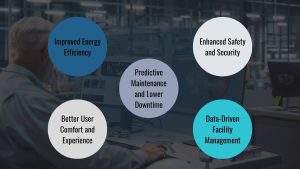
- Improved Energy Efficiency. Energy is one of the largest operating costs for buildings. Smart software optimizes consumption by aligning energy usage with actual demand. This reduces waste and supports sustainability goals.
- Better User Comfort and Experience. Smart buildings respond to people, not just systems. They adjust temperature, lighting, and air quality based on occupancy and preferences. As a result, employees, residents, and visitors enjoy a more comfortable and productive environment.
- Predictive Maintenance and Lower Downtime. Instead of waiting for equipment to fail, smart software monitors performance trends. It detects early warning signs and schedules maintenance before breakdowns occur. This reduces downtime, extends equipment life, and lowers repair costs.
- Enhanced Safety and Security. Integrated security systems enable smarter surveillance, access control, and emergency response. Software can correlate data from multiple sources to identify risks faster and trigger alerts automatically.
- Data-Driven Facility Management. Facility managers gain a clear, centralized view of building performance. Dashboards show energy usage, system health, and occupancy trends. This supports better planning, budgeting, and strategic decisions.
Technologies Powering Smart Buildings
Smart buildings rely on a combination of advanced technologies:
- Internet of Things (IoT) for sensor networks and device connectivity
- Cloud platforms for scalable data storage and processing
- AI and machine learning for predictive analytics and optimization
- Digital twins for simulating building behavior and testing improvements
- APIs and integration layers to connect legacy systems with modern platforms
The real value emerges when these technologies are integrated into one cohesive software ecosystem.
Challenges to Consider
While smart buildings offer significant benefits, implementation comes with challenges:
- Integrating legacy infrastructure with modern software
- Ensuring cybersecurity and data privacy
- Managing large volumes of real-time data
- Aligning IT and facility management teams
These challenges highlight the importance of careful system design and strong technical expertise.
How InStandart Helps Build Intelligent Environments
At InStandart, we help businesses design and build custom software solutions that connect physical infrastructure with digital intelligence.
We support:
- Development of smart building platforms
- Integration of IoT devices and legacy systems
- Data analytics and AI-driven optimization
- Secure cloud-based architectures
- UX/UI design for facility management dashboards
Our goal is to turn buildings into high-performing digital assets that support sustainability, efficiency, and better user experiences.
Conclusion
Smart buildings represent a shift from static infrastructure to dynamic, software-driven environments. Software now controls how buildings consume energy, maintain comfort, ensure safety, and support business goals.
By investing in smart building software, organizations gain more than automation. They gain visibility, intelligence, and control over real-world performance – and that creates measurable value for both operations and people.