

Navigation and Mapping Technologies for Smarter Logistics Operations
Introduction Modern logistics is evolving faster than ever. Companies require accurate data, real-time tracking, and efficient routing. Navigation and mapping technologies pla...
Introduction
Modern logistics is evolving faster than ever. Companies require accurate data, real-time tracking, and efficient routing. Navigation and mapping technologies play a key role in helping logistics teams stay ahead. They reduce delays, lower fuel costs, and improve customer service. Therefore, many logistics managers consider these tools a key element of their digital strategy.
Below, we’ll explore how intelligent navigation and mapping technologies are transforming logistics operations and why companies should invest in them today.
Why Navigation & Mapping Matter in Logistics
Logistics is complex. However, the right tools make it easier. Navigation and mapping technologies help teams understand the location of vehicles, assets, and goods at any given time. They connect planning and execution. They also support decision-making in unforeseen situations.
With accurate digital maps, companies can optimize routes, avoid traffic jams, and more accurately estimate delivery times. Even small improvements lead to significant savings. In fact, route optimization alone can reduce transportation costs by up to 20%. For companies with large fleets, this impact is significant.

Key Features of Modern Navigation & Mapping Technologies
Modern tools offer much more than just digital maps. They combine real-time data, automation, and predictive analytics. Let’s look at the most important features.
1. Real-Time Traffic and Weather Data
Road conditions can delay deliveries. Weather can completely halt operations. That’s why real-time data is so important. Advanced systems continuously monitor weather conditions. They instantly update routes whenever changes occur. This helps drivers stay safe and meet delivery schedules.
2. Dynamic Route Optimization
Traditional route planning is static. Modern systems adjust plans on the fly. They take into account distance, fuel consumption, road restrictions, and delivery slots. This allows them to create the most efficient route available at any time. Moreover, dynamic optimization helps avoid missed delivery slots.
3. Geofencing Capabilities
Geofencing allows companies to establish virtual boundaries. When a vehicle enters or exits a zone, the system sends alerts. This helps monitor compliance with regulations and improves visibility for urgent deliveries. Many logistics providers use geofencing to track high-value shipments.
4. Fleet Tracking and Monitoring
Fleet managers need a reliable monitoring system. A GPS fleet tracking system shows the location, speed, and behavior of a vehicle. It also helps identify deviations and respond quickly. Companies can also use this data to improve driver efficiency and reduce fuel consumption.
5. Integration with Warehouse and Transportation Systems
Mapping solutions are most effective when combined with other tools. Integration ensures automatic order updates and aligns warehouse operations with shipping schedules. As a result, companies reduce bottlenecks and optimize the overall workflow.
Benefits for Logistics Operations
Navigation and mapping technologies offer numerous practical benefits. They streamline processes from planning to delivery.
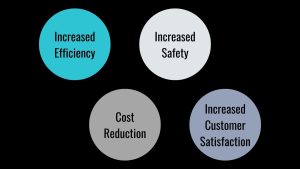
- Increased Efficiency. Because of better-designed routes, vehicles travel fewer miles. Fuel consumption is reduced. Delivery times are shortened. Ultimately, companies accomplish more with fewer resources.
- Cost Reduction. Fuel is expensive. Delays lead to significant costs. Real-time route adjustments prevent both. Even small cost savings quickly add up in large fleets.
- Increased Safety. Navigation systems identify road hazards. They warn of weather conditions. They also help prevent risky driving behavior. This improves driver safety.
- Increased Customer Satisfaction. Customers expect fast and predictable delivery. Accurate arrival times and real-time tracking increase transparency. Consequently, customers trust the service more.
Navigation & Mapping Trends Shaping the Future
Logistics is evolving. Navigation technologies are also advancing. Several emerging trends are driving innovation.
- AI-Based Predictive Routing. AI can detect patterns that humans miss. It anticipates traffic conditions, weather, and demand spikes, suggesting optimal routes. This reduces uncertainty and improves planning.
- Digital Twins for Transportation Networks. A digital twin is a virtual model. Companies use it to simulate routes, test scenarios, and prevent problems. It is becoming a powerful tool for large-scale logistics operations.
- Autonomous and Semi-Autonomous Vehicles. Self-driving systems rely heavily on advanced mapping data. As technology advances, logistics companies will require accurate navigation platforms to support their fleets.
- High-Precision Maps (HD Maps). HD maps provide centimeter-level accuracy. They are essential for robotics, drones, and automated warehouse equipment. Their role will increase as automation advances.
How Companies Can Get Started
Implementing navigation and mapping solutions doesn’t have to be complicated. Companies can start small and scale up gradually.
- Start with fleet tracking.
- Add dynamic routing to reduce fuel consumption.
- Integrate mapping tools with warehouse and order management systems.
- Train teams to use data effectively.
- Regularly evaluate performance and adjust strategies.
Even simple changes improve operational transparency and decision making.
Conclusion
Navigation and mapping technologies are no longer an afterthought. They are essential for smarter and more efficient logistics operations. As logistics becomes increasingly digital, companies that invest in modern mapping tools will gain a significant competitive advantage. They will work faster, respond more effectively, and provide a higher level of service.
If your business is ready to modernize its logistics capabilities, InStandart can help you select, create, or configure the right navigation and mapping solution.