

The Rise of AI-Augmented Teams: A Look into the Future of Work
Introduction AI is transforming the modern workplace. Yet it’s not replacing people. Instead, it’s becoming a powerful partner that helps professionals work smarter and faster...

Introduction
AI is transforming the modern workplace. Yet it’s not replacing people. Instead, it’s becoming a powerful partner that helps professionals work smarter and faster. Because of this, AI-augmented teams are emerging as a major trend. And this trend is defining what the future of work will look like.
What Are AI-Augmented Teams?
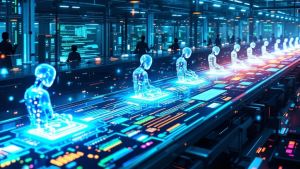
AI-powered teams are groups in which humans and artificial intelligence systems work together. The goal is simple: to combine human creativity with machine precision. AI tools can analyze data, process information, automate workflows, and support complex decision-making. At the same time, humans focus on strategy, communication, emotional intelligence, and innovation. As a result, teams become more effective and confident in their day-to-day tasks.
Why AI-Augmented Teams Are Growing So Quickly
Several factors are pushing companies to use AI in their projects.
First, data volumes are growing rapidly. Humans can’t analyze everything manually. AI transforms massive amounts of data into understandable conclusions.
Second, businesses want to eliminate routine work. Automation reduces errors and saves time.
Finally, competition is intensifying. Companies need faster decisions and more flexible processes. AI provides this speed.
In response to these needs, more and more organizations are investing in intelligent tools that support their teams, not replace them.

Key Benefits of AI-augmented teams for Businesses
Using artificial intelligence in combination with other technologies offers many significant benefits:
- Better decision making: AI provides accurate data in real time. Teams respond faster.
- Higher productivity: Routine tasks are automated. Employees focus on meaningful work.
- Improved collaboration: AI centralizes knowledge and helps teams share information.
- More innovation: By reducing manual work, people can explore creative ideas and new solutions.
- Reduced operational costs: Fewer repetitive processes mean fewer resource-intensive workflows.
Taken together, these benefits make teams more resilient and competitive.
Where AI Is Already Making an Impact
Artificial intelligence is already transforming everyday work in many industries.
In software development, AI suggests code improvements, identifies errors, and speeds up testing.
In marketing, it predicts customer behavior and helps personalize content.
In sales, AI guides teams to optimal next steps.
In customer support, chatbots handle basic questions, allowing human agents to solve complex problems.
Even HR specialists are using AI to screen candidates, match skills, and support performance evaluations.
With such widespread adoption, the use of AI is becoming an integral part of digital transformation.

Challenges on the Way
However, AI implementation is not without its challenges. Some employees fear AI could replace them. Others worry about data privacy or changes to job responsibilities. Therefore, leaders must communicate openly. They must explain why the company is using AI and how it will benefit people. Training is also important. Teams must understand how to use AI tools and adapt to new workflows. Furthermore, companies must ensure the ethical use of AI to build trust and transparency.
How Companies Can Prepare for the Future
Organizations should start by defining clear goals. They should identify which processes could be improved with AI. Then, they should test these tools through pilot projects. This approach minimizes risks and helps teams learn gradually.
Furthermore, companies should create a culture of continuous learning. Employees should feel comfortable experimenting and asking questions. And robust data protection practices should be implemented to ensure the security of sensitive information.
With advance preparation, businesses can fully reap the benefits of AI-augmented teams.
What the Future of Work Will Look Like
AI-augmented teams will soon become the standard across all industries. Work will become more flexible, data-driven, and collaborative. AI will take over much of the routine work. Meanwhile, humans will focus on creativity, leadership, and innovation.
In the future, the most successful companies will be those that combine human strengths with the capabilities of AI. And the most successful employees will be those who view AI as a partner, not a competitor.
Conclusion
Artificial intelligence is opening up new opportunities for teams around the world. It helps people work more efficiently, make better decisions, and innovate faster. Therefore, companies should embrace AI now. Those that do will gain a significant advantage in the rapidly changing future of work.