<1 day

Average clash resolution (from 3–5 days)

3–4 days

Stakeholder review cycle (from ~10 days)

<1 hr/week

Manual reporting workload (from ~8 hrs)

icon
icon

The Real Problem Isn't Detection. It's Resolution at Scale

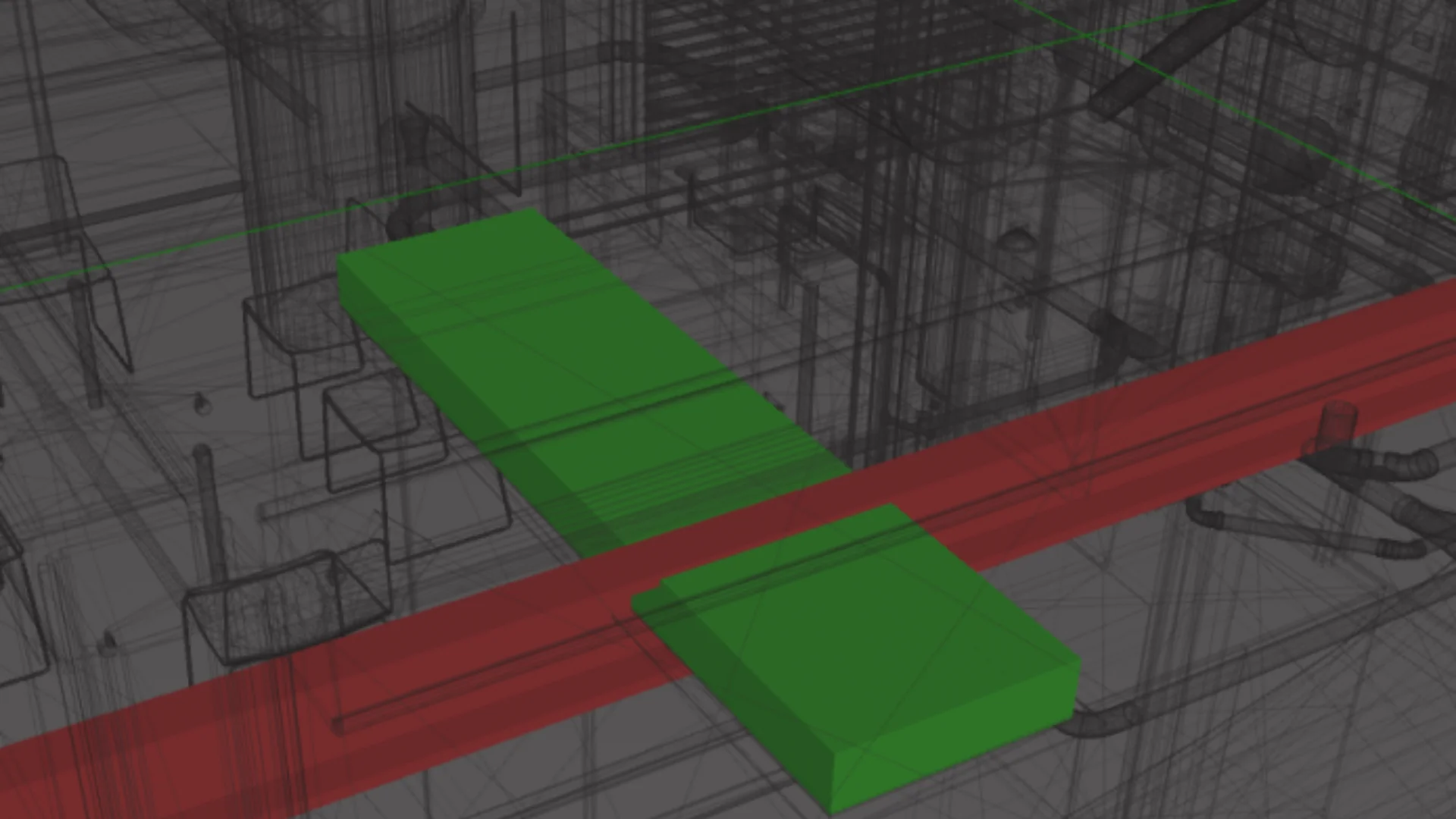
Clash detection is a solved problem. Navisworks has done it for years. The challenge – the one that quietly burns weeks of engineering time on every large EPC project – is managing clash resolution across disciplines, teams, and model versions over a multi-year lifecycle. What off-the-shelf clash detection software can't do

Discipline-specific ownership logic

A clash between a pipe run and a structural beam needs to be assigned to the right discipline based on project-specific rules and contract boundaries. Generic tools flag the clash; they don't apply the ownership logic that makes it actionable.

Version state across multiple teams

When five disciplines update models in parallel, tracking which combination of revisions produced which clash – and whether the clash is still valid after a model update – requires version-aware clash management. Standard BIM viewers don't provide this.
No one knows which model version is current. Clashes get resolved against outdated geometry. The same issues reappear because someone loaded old files.

Resolution workflow integration

Resolving a clash isn't a single action: discussion, design decision, model update, verification. Capturing that workflow with timestamps, responsible parties, and a decision trail requires structured tooling that spreadsheets and review platforms can't reliably deliver.

Scale and reporting demands

Hundreds of active clashes across multiple disciplines, with reporting by discipline, severity, resolution rate, and model revision. Manual reporting consumes the engineering hours the tool was supposed to save.

How We Automate Clash Management – The ClashFlow Platform

A centralised 3D model review and clash management platform built around five components. Each one closes a specific gap that Navisworks and BIM 360 leave open.

Smart Clash Register

Automatically imports clash data from Navisworks and Revit. Categorizes every issue by type, location, discipline, and severity. Applies your project-specific ownership rules – not generic logic.

Version Control Module

Controlled model uploads and rollbacks with full change history and role-based access. Every team works from the current revision. The platform makes it structurally impossible to coordinate against an outdated model.

Cloud-Based Multi-Site Access

Engineers and stakeholders access clash data and model issues from any location – design office, client office, construction site. Review cycles that previously required everyone in one room now run asynchronously.

Dashboards & Automated Notifications

Visual dashboards show clash trends, resolution rates, and overdue items across all disciplines in a single view. Automated notifications alert assigned users when a clash is raised, updated, or approaching deadline. Manual follow-up disappears from the coordination workflow.

Clash Status Tracking

Each clash carries a status (Open / In Progress / Resolved / Verified), a responsible owner, and a resolution deadline. Complete logs make audit preparation a query, not a reconstruction effort.

icon
icon

What Results Can You Expect?

Real metrics from EPC projects that deployed our clash coordination platform.

Client's trust: 140+ completed projects

Clash Resolution: 3–5 Days → Less Than 1 Day

On a gas processing facility with civil, mechanical, piping, and electrical disciplines, resolving a single clash previously took 3–5 days due to unclear ownership, miscommunication between teams, and no structured decision history. With automated assignment, threaded discussions, and resolution verification built into the platform, the average resolution time dropped to under one day – an 80% improvement.

Client's trust: 140+ completed projects

Duplicate Clashes Reduced by 90%

The same facility was drowning in duplicate reports – the same conflict appearing across multiple detection runs because no system tracked clash identity across model revisions. Geometric fingerprinting and revision-aware tracking cut duplicates by 90%, meaning engineers spent their time resolving real issues instead of re-triaging ones they'd already handled.

Client's trust: 140+ completed projects

Review Cycle: 10 Days → 3–4 Days

Without a centralized review platform, each review iteration required manual consolidation from every discipline coordinator, physical coordination meetings, and email-based status chasing. Cloud-based access and asynchronous review workflows compressed the cycle from 10 days to 3–4 days – a 65% reduction that directly accelerated the project's design phase.

Client's trust: 140+ completed projects

Reporting Time: 8 Hours/Week → Less Than 1 Hour/Week

Discipline coordinators were spending an entire working day each week pulling clash data from multiple sources, reformatting for project manager review, and preparing client-facing reports. Automated dashboards and one-click report generation returned those hours to actual coordination work.

Client's trust: 140+ completed projects

Downstream Impact

Construction delays from undetected clashes reduced by 75%. Field rework costs down 40% due to earlier conflict detection. Engineering coordinators freed from status tracking to focus on problem-solving. Client satisfaction improved with real-time visibility and faster issue resolution.

Case Study

Real projects and real results

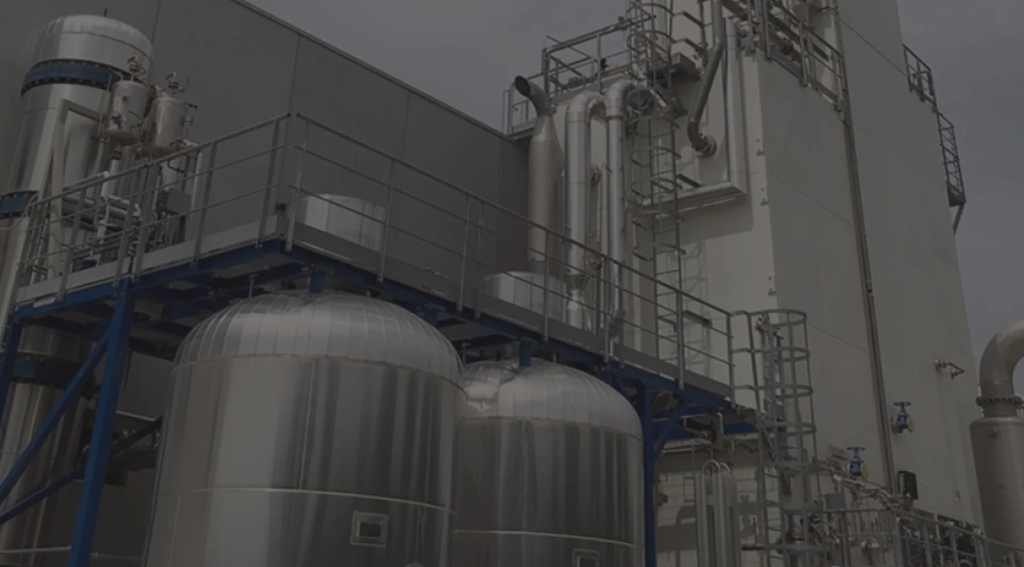
3D Model Review Tool for Multi-Disciplinary Clash Management on a Gas Processing Facility

Eight engineering disciplines. Hundreds of clashes. All tracked in Excel with no version control. Coordination meetings wasted time arguing about which model was current.

We deployed an automated platform with version control, duplicate filtering, assignment workflows, and live dashboards. The result: coordinators could stop chasing spreadsheets and start solving actual design problems.

Result: 50% faster reviews. 80% fewer manual errors. 90% better cross-team coordination.

View More Details
3D Model Review Tool for Multi-Disciplinary Clash Management on a Gas Processing Facility

Engagement Model & Investment

Phased deployment that proves value before scaling across your organization.

Phase 1

Coordination Assessment (1-2 weeks)

We analyze your current clash coordination processes, quantify time spent, and identify automation opportunities.


What’s included:

  • Workshops with discipline coordinators and project managers
  • Review of current coordination workflows (Excel tracking, reporting, meetings)
  • Time and cost analysis of manual coordination overhead
  • CAD platform assessment (E3D, Plant 3D, Revit, Tekla, etc.)
  • Implementation roadmap with quick wins
  • ROI projection based on time savings and error reduction


Deliverable: Coordination assessment report with current-state analysis, automation opportunities, and business case for platform deployment.

Phase 2

Pilot Deployment (4-6 weeks)

Limited deployment on a single project that proves the platform works and validates ROI before full rollout.


What’s included:

  • Platform setup for pilot project (single site/area)
  • Integration with 2-3 CAD platforms
  • Automated clash detection configuration
  • Basic workflow setup and assignment rules
  • Web dashboard for coordination team
  • User training and documentation
  • Pilot support (2-3 model revision cycles)
  • Performance metrics and ROI validation


Deliverable: Working platform deployed on pilot project with measured time savings, clash resolution improvements, and validated ROI for full deployment decision.

Phase 3

Full Deployment (2-4 months)

Enterprise-wide rollout with advanced features, multi-project support, and organizational change management.


What’s included:

  • Full platform deployment (unlimited projects/users)
  • All CAD platform integrations
  • Advanced workflow automation and routing
  • Version control and change tracking
  • Automated reporting and dashboards
  • Mobile access for field teams
  • Integration with document management and project controls
  • Comprehensive training program (all roles)
  • Change management support
  • Go-live support and optimization


Investment range factors: Number of concurrent projects, CAD platforms, user count, customization requirements, and integration complexity.

Phase 4

Support & Enhancement (Ongoing)

Continuous platform support, feature enhancements, and evolution as your coordination needs grow.


What’s included:

  • Technical support and issue resolution
  • CAD platform version compatibility updates
  • New feature development based on user feedback
  • Performance monitoring and optimization
  • Additional CAD platform integration
  • Training for new project teams
  • Quarterly process optimization reviews

Contact Us to Know More About Your Project's Roadmap

Get Your Project Roadmap

How ClashFlow Fits With Your Existing BIM Stack

We don’t replace Navisworks or Revit. We build the resolution layer on top.

Input: Clash data from Navisworks, Revit, AVEVA E3D, Plant 3D, Smart 3D

Output: Structured clash register, version-aware tracking, dashboard reporting, audit-ready logs

Integrates with: Your ERP for BoM reconciliation (see DesignBridge — CAD-ERP Integration) and your reporting workflow (see DrawExtract — CAD Data Export)

Frequently Asked Questions

Ask Your Technical Question

What CAD platforms does ClashFlow support?

ClashFlow integrates with Navisworks, Autodesk Revit, AVEVA E3D, Tekla Structures, AutoCAD Plant 3D, and Intergraph Smart 3D. The platform federates models from multiple tools – your teams keep working in their native environments while ClashFlow handles cross-platform clash detection and coordination. If you use a platform not listed here, we assess integration feasibility during Phase 1.

How does automated clash detection differ from Navisworks clash detection?

Navisworks detects clashes. ClashFlow manages their resolution. The difference is operational: Navisworks produces a list of geometric conflicts. ClashFlow takes that list (or runs its own detection on model check-in), eliminates duplicates, applies project-specific filtering and prioritization rules, assigns each clash to the responsible engineer, tracks the full resolution workflow, verifies fixes against updated models, and generates audit-ready reports. On a recent gas processing facility project, this operational layer reduced clash resolution time by 80%.

Can non-CAD users access the review platform?

Yes. ClashFlow’s web interface provides 3D model visualization, clash status tracking, and reporting dashboards without requiring any CAD software license. Project managers, clients, and discipline leads review and approve through a browser. Field teams use mobile access to check clash status and upload site photos. Only the underlying detection engine requires CAD platform access.

How does ClashFlow handle multi-discipline coordination?

Each clash is automatically routed to the responsible discipline and specific engineer based on configurable rules: element type, location zone, contract scope, or a custom ownership matrix that reflects your project’s organizational structure. Resolution tracking captures discussion threads, design decisions, and model updates with full audit trail. Dashboards show coordination performance by discipline, making bottlenecks visible before they delay the project.

What is the typical project timeline from assessment to full deployment?

Assessment takes 1–2 weeks. Pilot deployment on a single project runs 4–6 weeks and covers 2–3 model revision cycles – enough to validate ROI with real data. Full enterprise deployment takes 2–4 months depending on the number of projects, CAD platforms, and integration complexity. Most clients make the pilot-to-full decision within one revision cycle after seeing measured time savings.

Ready to compress your clash resolution cycle?

Book a 30-minute technical call. We'll review your current coordination workflow, identify where automation produces measurable time savings, and show how the ClashFlow architecture maps to your project structure.

38 Middlehill Road,
Wimborne, BH21 2SE