
Live Training Is Expensive and Risky
Preparing equipment for training requires shutting down or isolating sections. Inexperienced operators create real safety exposures.
Training time cut
Safety incidents reduced
Emergency response readiness improved
Preparing equipment for training requires shutting down or isolating sections. Inexperienced operators create real safety exposures.
Classroom + shadowing ≠ real plant experience. Interns don't see emergency situations until they happen.
Valve failures, oxygen purity drops, power loss, cryogenic leaks – operators cannot train on these scenarios on live equipment.
Off-the-shelf OTSs use generalized process models. Your ASU/plant has a specific configuration that determines actual behavior. Training on a generic model creates false confidence.
Off-the-shelf training platforms use generalized process models and generic plant layouts. That creates a dangerous gap: operators learn responses that don’t match how your plant actually behaves.
Your ASU has specific thermodynamic configurations. Your refinery has specific column designs, compression ratios, and product purity setpoints. A simulator that doesn’t reflect these specifics trains operators on wrong responses – creating false confidence rather than genuine preparedness.
We build every simulator from your engineering documentation – your 3D model, your P&IDs, your process data – so operators train on exactly the equipment, layout, and control logic they’ll encounter on the real plant.
Five integrated components that create realistic, effective operator training environments.
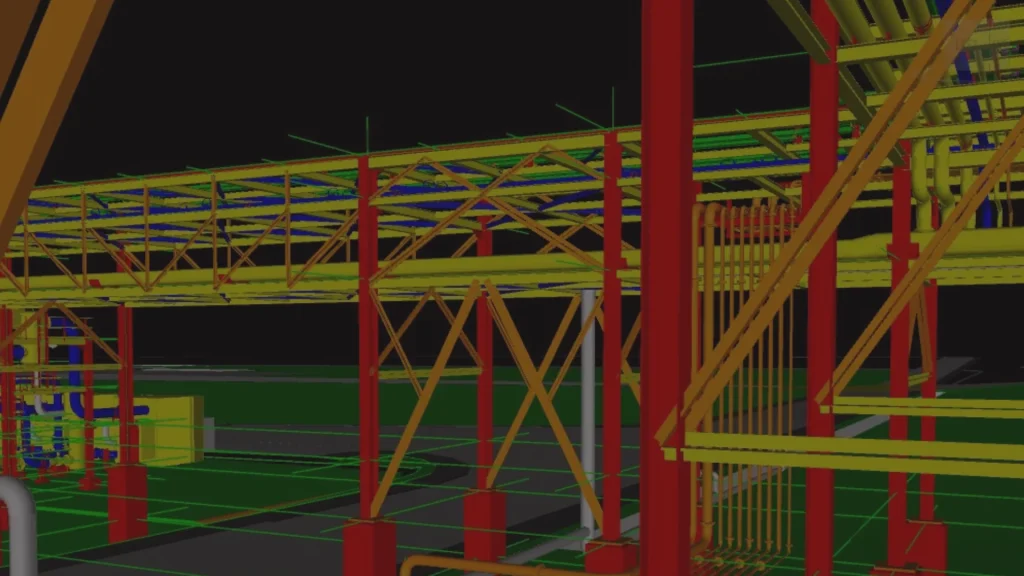
Starting from P&IDs, PFDs, 3D CAD models (Plant 3D, AVEVA E3D), and equipment specifications, we generate accurate 3D representations with correct equipment placement, piping routing, instrumentation location, and spatial relationships.
Every operational element responds to trainee interaction – valves operate, instruments display real-time readings, alarms trigger based on process conditions. The simulation tracks all actions with consequences propagating through the virtual process – providing immediate feedback on operational decisions.
Trainers select from pre-configured scenarios or create custom situations: equipment trips, valve failures, instrument malfunctions, utility losses, leaks, fires. The simulation responds realistically – alarms cascade, process upsets develop, operators must diagnose and respond. Scenarios pause for discussion or replay for analysis.
The system tracks every operator action, procedure completion time, error types, safety compliance, and emergency response effectiveness. Training managers access dashboards showing individual progress, cohort performance, common mistakes, and certification readiness. Automated reports document proficiency achievement for regulatory compliance.
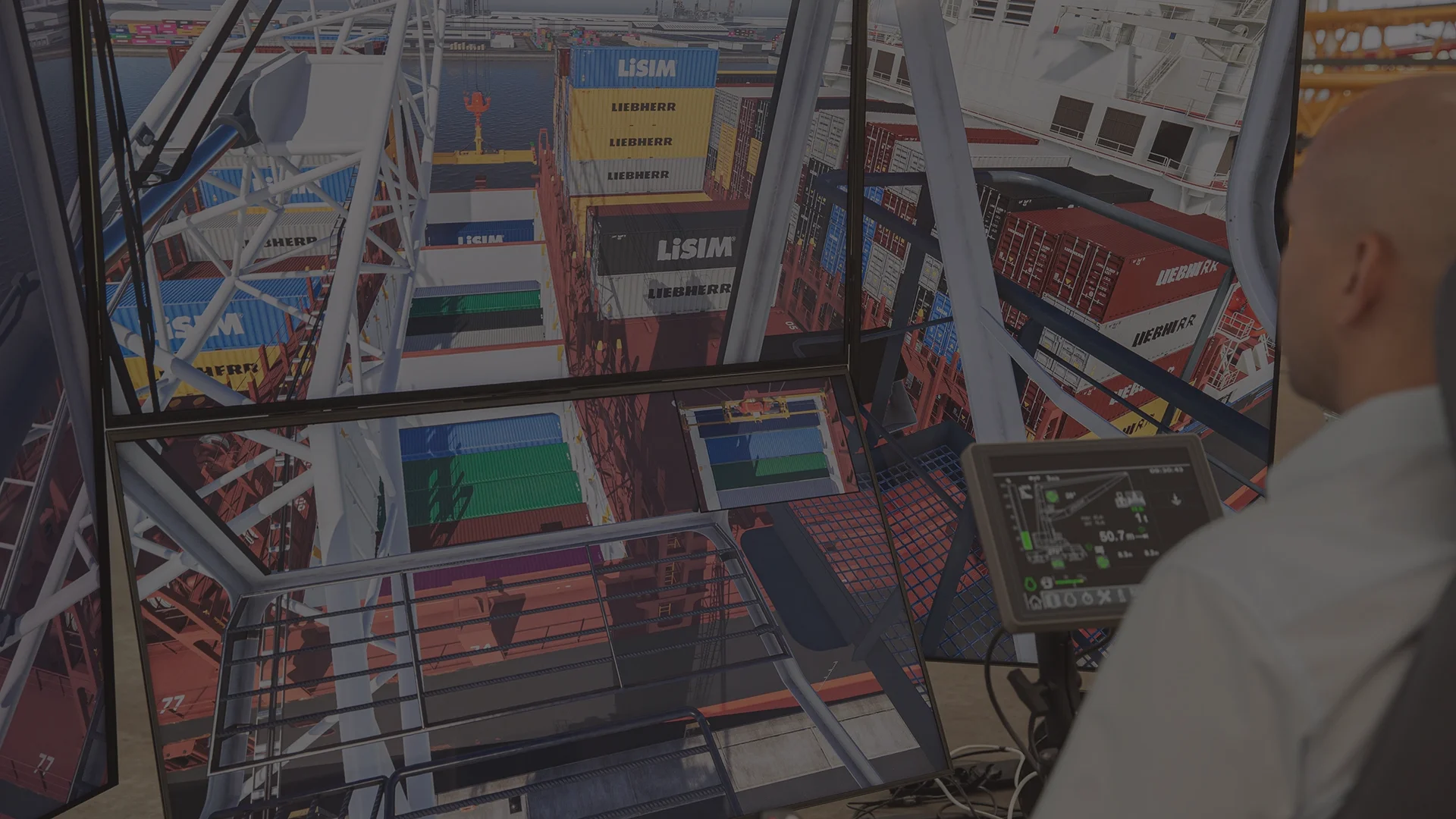
Flexible deployment options that match your training environment and accessibility needs – from immersive VR to desktop workstations to mobile tablets. Multi-platform support enables hybrid training approaches: VR for initial immersive training, desktop for procedure practice, mobile for field reference – all using the same simulator core.
Simulators eliminate training-related incidents by providing a zero-risk environment for operators to practice emergency response. Digital training logs with timestamps, action records, and competency scores simplify regulatory compliance and audit preparation.
Compress certification timelines with standardized, repeatable training that doesn't depend on individual trainer availability or quality. Objective performance data replaces subjective evaluation – you see exactly where each operator needs more practice.
Train operators without taking production offline. Simulators deliver competent operators faster, reduce operational incidents from undertrained crews, and scale workforce onboarding without proportionally scaling training costs.
Project scope depends on facility complexity, the number of process units, and the fidelity level required. A single-unit simulator (like our ASU project) is a different investment than a multi-unit refinery training platform. We scope every project after reviewing your engineering documentation – book a discovery call to get a ballpark based on your specific facility.
A typical single-unit simulator takes 10–16 weeks from engineering data handoff to deployment-ready build. The timeline depends on the completeness of your 3D model, the number of interactive scenarios required, and the deployment platforms you need. We deliver a functional concept within the first 3 weeks so you can validate direction early.
Yes. If you don’t have a detailed 3D CAD model, we can construct the 3D environment from P&IDs, PFDs, equipment datasheets, and general arrangement drawings. The result is less geometrically precise than building from a full 3D model, but still accurate enough for effective operator training – correct equipment placement, piping topology, and instrumentation locations.
We support Meta Quest (standalone, no PC required), HTC Vive, and other major SteamVR-compatible headsets. For organizations without VR hardware, the same simulator runs on standard desktop workstations and tablets. Most clients start with desktop deployment and add VR once they validate the training approach.
The performance tracking system automatically generates digital training records – timestamped logs of every operator action, procedure completion data, error patterns, and competency scores. These records provide the documented evidence regulators and auditors require to verify operator proficiency, replacing paper-based training logs with objective, verifiable data.
Book a discovery call where you share the process unit or facility you need to simulate – air separation, chemical reactor, distillation column, compression system, power generation, whatever operators need training on.