

3D Model Review Tool for Multi-Disciplinary Clash Management on a Gas Processing Facility
An engineering, procurement, and construction contractor was managing design coordination across civil, mechanical, piping, and electrical disciplines for a large gas processi...
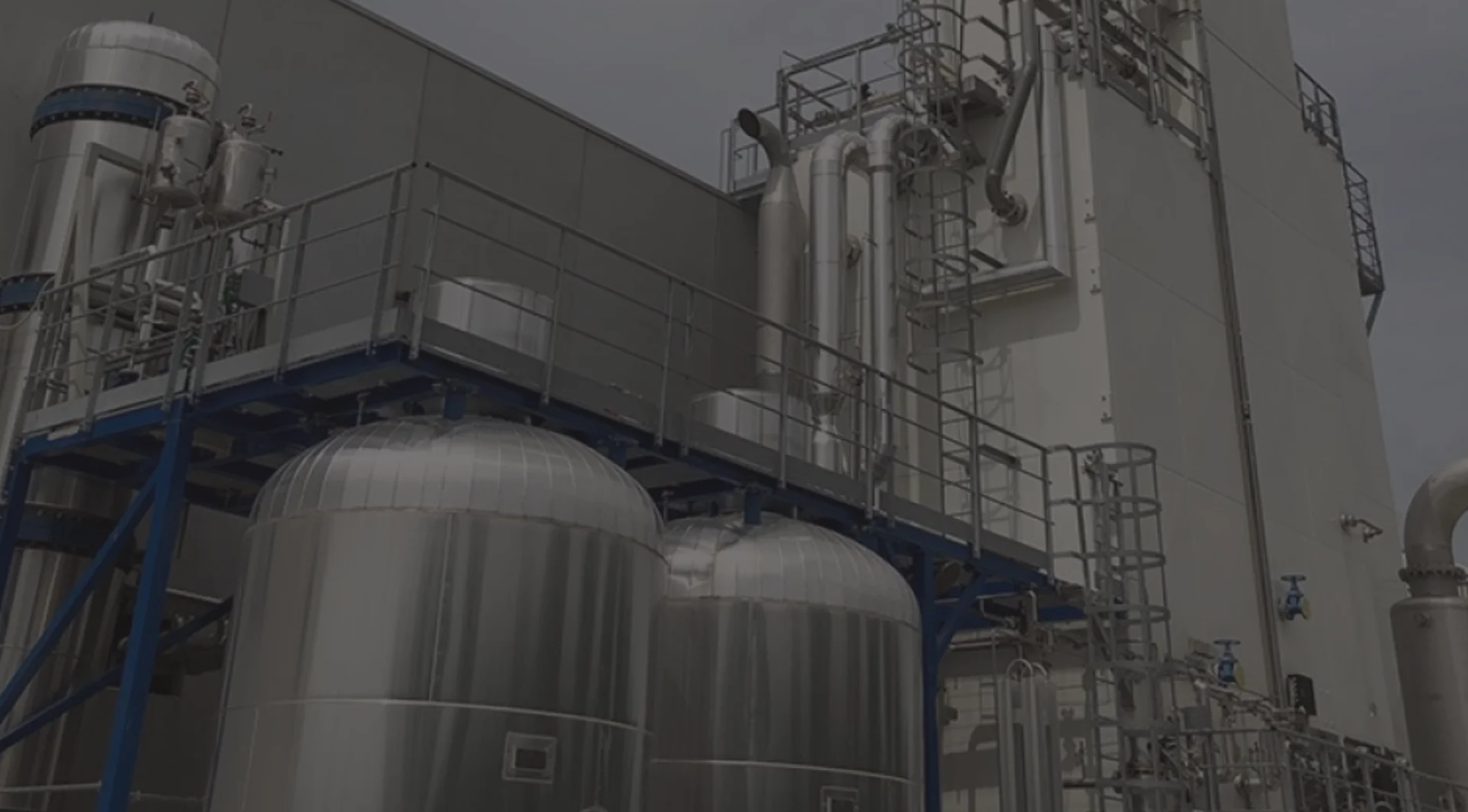
An engineering, procurement, and construction contractor was managing design coordination across civil, mechanical, piping, and electrical disciplines for a large gas processing facility. Clash issues were tracked in spreadsheets, 3D model revisions circulated between teams without version control, and resolving a single clash took up to five days.
InStandart built a centralized 3D model review platform with a smart clash register, real-time status tracking, and version control — replacing fragmented coordination workflows with a single shared environment visible to every discipline and accessible from any location.
Project Summary
| Industry: | Industrial Construction & Engineering (EPC) |
| Client: | EPC contractor — large gas processing facility |
| Disciplines: | Civil, Mechanical, Piping, Electrical |
| Project Scope: | Custom 3D model review platform with clash management, version control, and live dashboards |
| Core Technologies: | Navisworks API, Revit, BIM Integration, Cloud Access |
The Problem: Fragmented Coordination Across Disciplines
- Manual Clash Tracking in Spreadsheets. Clash issues were documented manually, making it nearly impossible to track responsibility, resolution progress, or recurrence across disciplines. There was no single source of truth for who owned what — or whether it had been resolved. Spreadsheet errors and missed updates meant the same clash was sometimes logged multiple times by different teams.
- Version Chaos Across Teams. Multiple revisions of the 3D model circulated between civil, mechanical, piping, and electrical teams without clear version history or access control. Teams regularly worked from outdated geometry, producing design conflicts and duplicated effort that only surfaced late — after significant work had already been done.
- Ineffective Review Cycles. Stakeholders had no centralized environment to review clashes across disciplines or monitor resolution status in real time. Review meetings relied on static reports that were already stale by the time they were distributed, making it impossible to course-correct quickly.
- Time-Consuming Issue Resolution. Resolving a single clash could take three to five days due to unclear ownership, miscommunication between teams, and no structured history of decisions made. These delays cascaded into construction schedule pressure and increased site rework costs when coordination failures weren’t caught until the build phase.
The Solution: Centralized 3D Model Review Platform
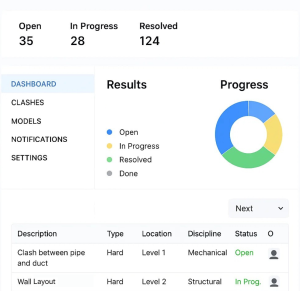
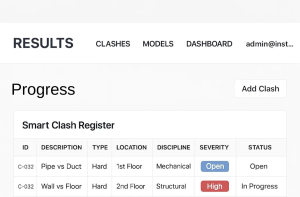
- Smart Clash Register. Automatically imports clash data from BIM software (Navisworks, Revit) and categorizes every issue by type, location, discipline, and severity. The import eliminates manual logging entirely — clashes are captured at source, not transcribed after the fact. Classification rules are configurable per project, so the register reflects how the project team actually organizes work, not a generic taxonomy.
- Clash Status Tracking. Each clash is assigned a status (Open, In Progress, Resolved, Verified), a responsible owner, and a resolution deadline. Ownership is unambiguous from the moment a clash is detected — no back-and-forth between disciplines about who acts next. The full resolution history is preserved, including comments, status changes, and responsible parties at every step.
- Version Control Module. Controlled model uploads and rollbacks with full change history and role-based access permissions. Every team works from the same current revision — the platform makes it impossible to unknowingly use an outdated model. Changes are logged with timestamps and the uploading user, giving project managers a clear audit trail of when and how the model evolved.
- Dashboard & Automated Notifications. Visual dashboards show clash trends, resolution rates, and overdue items across all disciplines in a single view. Automated email notifications alert assigned users when a clash is raised, updated, or approaching deadline — eliminating the need for manual follow-up. Project managers can monitor the coordination health of the entire facility at a glance, not just one discipline at a time.
- Cloud-Based Multi-Site Access. Engineers and stakeholders access clash data and model issues from any location — design office, client office, or construction site. Review cycles that previously required everyone to be physically present in a meeting can now happen asynchronously, compressing the 10-day review cycle to three or four days.
Results
Measured against the same coordination workflows before the platform was deployed:
| Metric | Before | After |
|---|---|---|
| Average clash resolution time | 3–5 days | <1 day |
| Clash resolution tracking errors | Common | Eliminated |
| Duplicate clashes across model versions | Frequent | Reduced by 90% |
| Stakeholder review cycle duration | ~10 business days | 3–4 business days |
| Manual reporting workload | ~8 hours/week | <1 hour/week |
| Overall clash management efficiency | Baseline | +60% improvement |
Additional operational improvements:
- Real-time coordination across disciplines reduced site rework and the cost of late-stage design changes.
- Clear ownership and resolution deadlines improved accountability without requiring management escalation.
- Complete resolution logs and version history made project audit preparation straightforward rather than a manual reconstruction effort.
- Shared visibility across design offices and the construction site reduced the communication overhead that had been consuming coordination meetings.
Why This Problem Is Hard (and Why Generic Tools Don’t Solve It)
Clash detection is a solved problem — Navisworks has done it for years. The challenge isn’t detecting clashes; it’s managing their resolution across disciplines, teams, and model versions over the full lifecycle of a project. That’s where off-the-shelf tools fall short:
- Discipline-Specific Ownership Logic. A clash between a pipe run and a structural beam needs to be assigned to the right discipline — and that assignment depends on project-specific rules, contract boundaries, and who holds responsibility for each element. Generic tools can flag the clash but can’t apply the ownership logic that makes it actionable.
- Version State Across Multiple Teams. When five disciplines are updating their models in parallel, tracking which combination of revisions produced which clash — and whether that clash is still valid after a model update — requires version-aware clash management that standard BIM viewers don’t provide.
- Resolution Workflow Integration. Resolving a clash isn’t a single action — it involves discussion, a design decision, a model update, and verification. Capturing that workflow, with timestamps, responsible parties, and a full decision trail, requires structured workflow tooling that spreadsheets and generic review platforms can’t reliably provide.
- Scale and Reporting Demands. On a large EPC project, hundreds of active clashes across multiple disciplines need to be tracked simultaneously. The reporting that project managers, clients, and auditors need — by discipline, by severity, by resolution rate, by model revision — cannot be produced manually without consuming the engineering hours the tool is meant to save.
Applicability: Where This Approach Works
The clash management and review platform architecture developed for this project applies across a range of construction and engineering contexts:
- Oil & Gas EPC. Multi-disciplinary clash coordination on upstream and midstream facilities — refineries, gas processing plants, offshore platforms — where design complexity and rework costs are high.
- Industrial Construction. Manufacturing facilities, power plants, and chemical processing plants where civil, structural, mechanical, and electrical disciplines need a shared coordination environment through design and into commissioning.
- Infrastructure & Civil. Large infrastructure projects — tunnels, bridges, transport hubs — where clashes between structural, MEP, and architectural models need structured resolution workflows across geographically distributed teams.
- Commercial Construction. High-rise and mixed-use developments where architects, structural engineers, and MEP contractors need a shared clash register that integrates with Revit and Navisworks workflows without replacing existing BIM tooling.
- Facility Management. Post-construction, the same platform structure supports ongoing model-based facility management — linking clash history to as-built records and maintenance systems for lifecycle asset management.